The 5-Second Rule: How to Tell Real Pearls From Fakes Without a Lab
In an era of hyper-realistic faux beads—from synthetic plastic beads and coated glass to factory-pressed "shell pearls"—discerning authentic ocean treasures from manufactured imitations can feel daunting. Yet, nature leaves indelible fingerprints that no industrial casting machine can duplicate. You do not need a gemological laboratory or specialized calipers to verify authenticity. In just five seconds, the sensory traits of organic nacre reveal the truth. Below, our atelier shares four intuitive touchstones to authenticate genuine pearls instantly in the palm of your hand.
I. The Temperature Test: The Instant Cool of Real Nacre
When you first pick up an authentic pearl, it should feel distinctly cold against your fingers or cheek, gradually warming only after absorbing your body heat. Plastic and synthetic resin beads immediately feel room-temperature or faintly warm to the touch. While high-grade glass beads may initially feel cold, they lack the specific thermal conductivity and balanced heft of genuine calcium carbonate aragonite. Genuine pearls possess an unmistakable density and cool morning clarity from the very moment of contact.
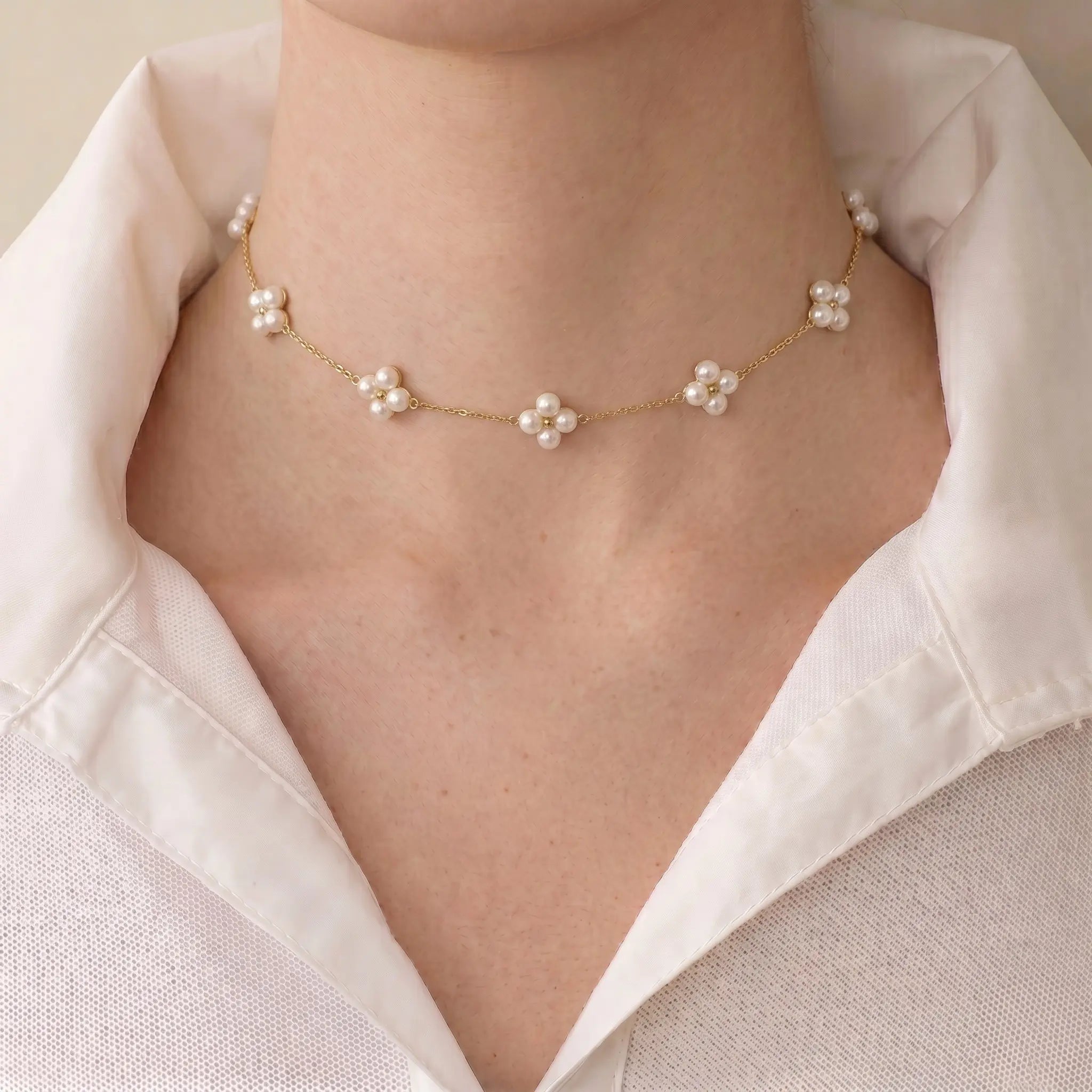
Organic Density: The Dainty 18K Solid Gold Berry Pearl Station Necklace
II. The Microscopic Friction: Aragonite Platelets vs. Slippery Plastic
The famous "tooth test" remains a jeweler’s gold standard because it is grounded in crystal physics. Under high magnification, genuine pearl nacre resembles a microscopic brick wall of overlapping crystalline platelets. When gently rubbed against the edge of a front tooth or against another pearl, real nacre creates a subtle, gritty tactile resistance. Synthetic or glass beads, sprayed with synthetic lacquer or mother-of-pearl dust, feel completely glassy, smooth, and slippery without any natural microscopic grip.

Crystalline Structure: The 18K Solid Gold Genuine Freshwater Pearl Y-Necklace
III. Surface Truth: Perfect Flaws vs. Industrial Sameness
Paradoxically, absolute perfection is the easiest tell of a fake. Machine-made faux pearls exhibit clinically identical spherical shapes, artificial chalky white coatings, and zero surface variation across a strand. Real pearls—even the highest AAA grade Akoya—display microscopic growth rings, tiny birthmarks, or subtle organic ripples when examined closely under natural daylight. Furthermore, authentic nacre possesses an "orient": an iridescent, multi-layered reflection where light bounces from deep within the crystal layers, rather than a superficial painted surface sheen.

Natural Individuality: The 18K Gold Gemini Akoya Pearl Necklace
Beyond Imitation: Untreated Purity & Au750 Solid Gold
Fine jewelry exists to honor authentic beauty that survives trends and tests of time. The commercial market frequently blurs lines not only with faux beads, but also by cosmetically dying and chemically bleaching low-grade cultured pearls to mask inferior nacre. Onepearlife takes an uncompromising stance: we craft exclusively with rare, natural untreated pearls exhibiting organic mirror luster, paired with hallmarked solid 18K gold (Au750). Every piece is accompanied by guaranteed provenance—authentic luxury you can touch, wear, and trust forever.

Heirloom Authenticity: The Genuine 3-3.5mm Freshwater Pearl Choker in 18K Solid Gold
Invest with certainty in verified organic pearls and hallmarked solid 18K gold. Enjoy an exclusive 15% welcome gesture on your debut atelier acquisition.
Apply code WELCOME15 at checkout.
0 comments